Trends in Valve Production: Innovations Shaping the Future

The industrial valve has also continued to grow mainly due to technological advances that the manufacturers and suppliers continue to embrace to meet the market’s needs. Automation to the advanced material in development, the heart of valve production is experiencing a revolution that provides better performance, efficiency. Thus, in this article, we are going to focus on recent tendencies of valve production that can help B2B companies to identify opportunities when cooperating with gate valve manufacturers or other suppliers of valves.
Smart Valve Technology
Smart technology is one of the most profound trends observed in the production of valves in the last few years. Smart valves contain the various sensors and actuators which enable real-time monitoring and control from a distance. These valves are normally integrated into central systems; therefore, operators can check flow rates, pressure, and temperature from a distance. This level of control makes it easier to achieve the maximum performance of the system, minimal down time and the best maintenance through predictive maintenance.
It is certainly becoming a necessity for gate valve manufacturers to combine the smart technology into their production. The specific type of application of smart gate valves can be beneficial to the B2B businesses to improve their operational efficiency, especially for large extensive systems of industries. Smart valves could be said to be one of the most significant innovations, as their application enables the real-time data collection and analysis; the usage of which is only going to develop further as industries progress towards automation and the IIoT.
Advanced Materials and Coatings
Valves that are stronger and more effective have been most probably developed with the help of materials science. The application of additional functional layers is one of the most significant trends in the production of spare parts for valves. Present day valves have to work in demanding environments where temperatures are high, chemicals are corrosive and particles abrasive. In order to satisfy these requirements, manufacturers are now opting for additional components such as exotic alloys, high-grade stainless steel and ceramic coatings.
More specifically, these innovations are favorable for the gate valves that are applied in water treatment, oil and gas, and power generation industries. For example, the manufacturers of gate valves are using corrosion resistant alloys to increase the service life of these products in the presence of aggressive chemicals. When comparing gate valve vs plug valveThe fact that gate valves are made from high end materials makes it easy for them to withstand high pressure hence being favorable in many industries.
3D Printing and Additive Manufacturing
The advancements made in 3D printing and additive manufacturing are also the other just emerging trends affecting valve manufacturing. These technologies help manufacturers to produce numerous parts of the valve with high accuracy and within a shorter period than what would have been taken while using conventional techniques. Additive manufacturing makes it easy to manufacture parts that are highly geometrically more complex than the traditional methods where the parts are produced through machining.
To B2B companies, 3D printing enables the benefit in the lead time and in the cost because the expensive molds and tooling are removed. Manufacturers of gate valves can now create new designs and models of the valves and produce small quantities of the special valves they need for testing then improve on them to suit their needs much faster. The use of 3D printing also has the added advantage of flexibility especially in responding to emerging market trends, whereby manufacturers can produce products that meet specific customer requirements in a short span.
Automation in Valve Production
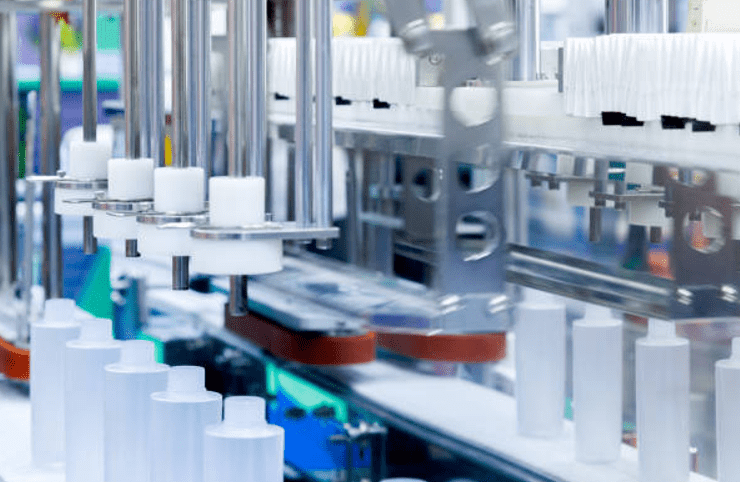
With the help of automation, changes start to appear in manufacturing fields, valve production is included. Robot integration, Numerical control machining and auto inspection which are the trends of the modern manufacturing processes are being practiced in the valve production lines. These technologies not only help in increasing productivity but also help in quality and standard control of the end product.
From the perspective of the manufacturing of gate valves, automation gives the manufacturers the opportunity to increase scale to some extent while holding quality to rather high standards. Automated systems involve the use of robots to execute repetitive operations and with ease hence minimizing errors that could be made by humans. Furthermore, by adopting automated inspection systems, defects or inconsistencies in valves’ parts can easily be detected consequently supplying the market only with quality items. This trend towards automation will remain in force in the near future and will have a positive impact on the continuous reduction of production costs as well as the enhancement of reliability of industrial valves.
Sustainability and Energy Efficiency va
Eco-friendliness is obviously another factor that is gaining more and more importance in the manufacturing of valves. There has been an increasing call for industries across the globe to reach environmental standards; thus, valve manufacturers are devising ways and means of producing highly energy-efficient valves and manufacturing the valves under sustainable manufacturing strategies. This includes reducing the energy utilization by the valves, and also minimizing emissions as well as wastes during the manufacturing process.
As an example, gate valves are being manufactured to decrease flow resistance thereby decreasing energy demand by pumping stations. Between the two types of valves, the gate valve vs plug valveThe latter can be considered to be more energy efficient in some industrial processes, which require low pressure drop. On the aspect of production, there are also existing means of minimizing waste for instance by recycling scrap metal and environment friendly coatings. As the demand for sustainability remains important, these innovations will remain in part in determining the future of valves.
There are several trends that are currently occurring and are affecting the industry, some of which include; smart technology, advancement in material, 3D printing, automation, and sustainability of the valve production industry. Thus, to B2B businesses these trends mean the opportunity to advance on various aspects of production, working with the innovative gate valve manufacturers, and, therefore, the chance for the overall goal of everybody’s benefits: efficiency, saving and Ecological impact minimization. Over time and with the change of industries, the valve production sector will also not be left behind and this will continue to develop more products that shall be able to answer the needs of future industries.
Related posts